
September 20, 2026
HDPE Uniaxial Geogrid: Specs, Performance and Civil Engineering Uses
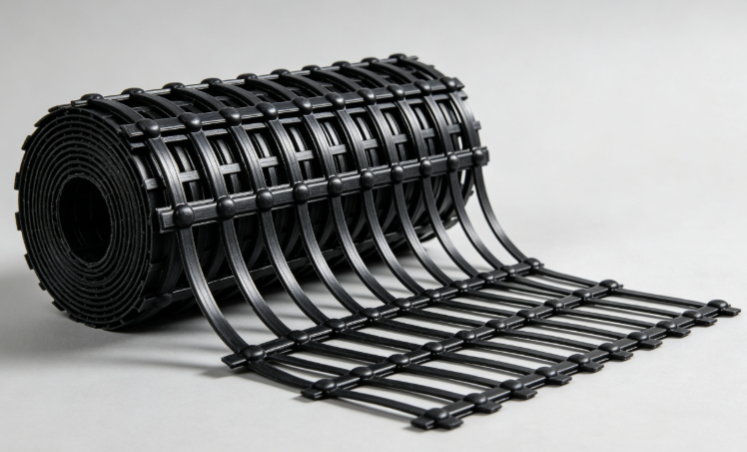
Table of Contents
1. Product Overview
2. Core Structural Characteristics
3. HDPE Uniaxial Geogrid Performance Data Comparison
4. Key Functional Advantages
5. Common Civil Engineering Applications
6. Installation Guidelines
7. Industry FAQ
1. Product Overview
HDPE uniaxial geogrid is a high-strength geosynthetic material. It made from high-density polyethylene through extrusion and uniaxial stretching processes.
This uniaxial geogrid features one-way tensile strength. It focus on longitudinal load bearing for soil reinforcement projects.
HDPE raw material brings strong chemical stability. It resist corrosion, aging and harsh underground environment damage.
Engineers widely use HDPE uniaxial geogrid for slope stabilization and retaining wall reinforcement. It improve overall soil structural strength.
2. Core Structural Characteristics
2.1 Unidirectional Stretching Structure
HDPE uniaxial geogrid forms integrated grid texture after uniaxial stretching. The molecular chain arranges in a single direction.
This special structure greatly boost longitudinal tensile capacity. Transverse strength stay basic for auxiliary fixing.
The whole grid is one-piece molded. No splicing points exist to avoid structural fracture.
2.2 High-Density PE Material Property
Pure HDPE material has low water absorption. It does not expand or deform in humid soil conditions.
The material resist acid, alkali and salt corrosion. It adapt long-term buried underground working state.
Anti-ultraviolet additives enhance outdoor durability. It slow aging under long sun exposure.
3. HDPE Uniaxial Geogrid Performance Data Comparison
Different strength grades of HDPE uniaxial geogrid have clear performance gaps. All test data follow ASTM D6637 standard for civil engineering construction reference.
Geogrid Grade | Max Tensile Strength (kN/m) | Tensile Strength @2% Strain (kN/m) | Tensile Strength @5% Strain (kN/m) | Elongation at Break |
HDPE 50 | 50 | 14 | 32 | ≤10% |
HDPE 80 | 80 | 22 | 48 | ≤10% |
HDPE 120 | 120 | 35 | 65 | ≤10% |
HDPE 160 | 160 | 45 | 85 | ≤10% |
High-grade HDPE uniaxial geogrid maintain stable tension under low strain. It provide effective soil constraint in early stage of stress.
All grades keep low elongation rate. It avoid large soil deformation during infrastructure operation.
4. Key Functional Advantages
4.1 Powerful Soil Reinforcement
Grid gaps lock soil particles tightly. It reduce lateral soil displacement under external pressure.
HDPE uniaxial geogrid disperse concentrated load evenly. It prevent foundation settlement and structural collapse.
4.2 Long Service Life
HDPE material does not rust or rot like metal grids. It keep stable performance for more than 50 years underground.
Anti-aging formula resist long-term environmental erosion. No frequent replacement needed after construction.
4.3 Easy Construction Operation
Lightweight grid structure easy to cut and lay on site. It save manual construction time and engineering cost.
No special construction equipment required. Ordinary laying tools complete installation work.
5. Common Civil Engineering Applications
5.1 Retaining Wall Reinforcement
HDPE uniaxial geogrid is the main material for reinforced soil retaining walls. It balance lateral soil pressure effectively.
It reduce wall thickness and overall project investment. Wall structure stay stable for long term.
5.2 Highway and Road Foundation
The geogrid reinforce road base and subgrade. It prevent pavement cracking and uneven settlement.
It extend road service life under repeated vehicle load.
5.3 Slope Protection Engineering
Uniaxial geogrid fix loose slope soil. It avoid landslide and rainwater erosion damage.
It cooperate with vegetation protection to form stable slope protection system.
6. Installation Guidelines
Lay HDPE uniaxial geogrid with tensile direction parallel to main stress direction.
Keep grid flat and no wrinkles during laying. Wrinkle cause uneven stress bearing.
Overlap grid edges according to design standard. Firm fixing prevent grid displacement.
Cover soil layer immediately after laying. Avoid long-time sun exposure before backfilling.
7. Frequently Asked Questions
Q1: What is HDPE uniaxial geogrid mainly used for?
A1: It mainly used for retaining wall reinforcement, road foundation stabilization and slope protection. It provides one-way high tensile strength for soil reinforcement.
Q2: What is the standard test method for this geogrid?
A2: Performance testing follows ASTM D6637 standard. It test tensile strength under 2% and 5% strain and breaking elongation rate.
Q3: How long can HDPE uniaxial geogrid last underground?
A3: Qualified HDPE geogrid has excellent anti-aging performance. It can keep stable working state over 50 years in buried environment.
Q4: What is the difference between uniaxial and biaxial geogrid?
A4: HDPE uniaxial geogrid focus on one-way high tension. Biaxial geogrid balance strength in two directions. Uniaxial type suit large stress civil engineering projects.
Q5: What grade geogrid fit common retaining wall projects?
A5: HDPE 80 and HDPE 120 grades are the most widely used. It meet conventional retaining wall and slope stabilization requirements.