
May 16, 2026
Key design points of composite geomembranes in landfill anti-seepage systems: the entire process from HDPE membrane thickness to seam welding to leakage detection
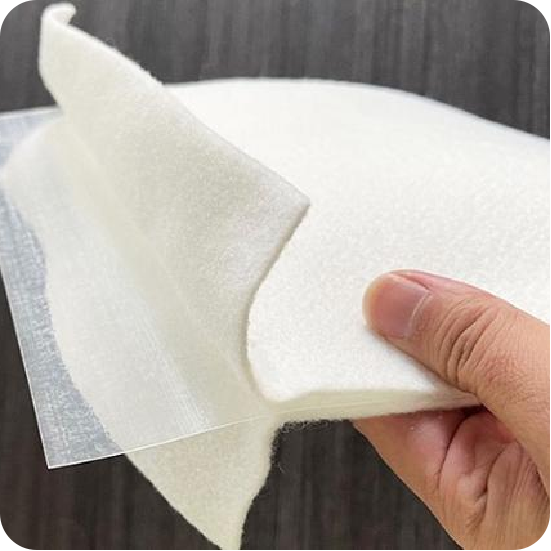
Table of Contents
1. Introduction
2. Overview of Composite Geomembrane and HDPE Membrane in Landfill Antiseepage
2.1 Definition and Core Functions of Composite Geomembrane
2.2 The Core Role of HDPE Membrane in Composite Geomembrane
3. Key Points of Antiseepage Design for Composite Geomembrane
3.1 Selection of HDPE Membrane Thickness: A Critical Factor for Antiseepage Effect
3.2 Other Key Links in Antiseepage Design
4. Seam Welding Technology: Ensuring the Integrity of Antiseepage System
4.1 Common Seam Welding Methods for Geomembrane Construction
4.2 Quality Control of Seam Welding
5. Leakage Detection: The Last Line of Defense for Antiseepage System
5.1 Common Leakage Detection Methods
5.2 Detection Timing and Standard Requirements
6. Performance Data Comparison of Composite Geomembrane and HDPE Membrane
7. Key Points of Geomembrane Construction in Landfill Antiseepage
8. Industry-Related FAQs
1. Introduction
Landfill is an important terminal disposal method for solid waste worldwide. Landfill antiseepage is the core of environmental protection, which can effectively prevent leachate from polluting groundwater and soil.
Composite geomembrane, as a high-performance antiseepage material, has been widely used in landfill antiseepage systems due to its excellent antiseepage performance and mechanical strength.
According to the "China Geomembrane Industry Development Blue Book (2025-2030)", the scale of China's geomembrane market reached about 150 billion yuan in 2023, with a year-on-year growth of 18%, and the demand in the landfill antiseepage field accounted for 23.6%.
HDPE membrane, as the core component of composite geomembrane, its thickness, seam welding quality and leakage detection effect directly determine the overall antiseepage performance of the system.
This article focuses on the design points of composite geomembrane in landfill antiseepage systems, covering the whole process from HDPE membrane thickness selection, seam welding to leakage detection, providing practical guidance for relevant engineering construction.
2. Overview of Composite Geomembrane and HDPE Membrane in Landfill Antiseepage
In landfill antiseepage projects, composite geomembrane and HDPE membrane are the most commonly used materials. Their performance and rational application are crucial to the long-term stability of the antiseepage system.
Many engineering failures are caused by improper selection of materials or unclear understanding of their performance characteristics.
2.1 Definition and Core Functions of Composite Geomembrane
Composite geomembrane is a composite material composed of geomembrane (mainly HDPE membrane) and geotextile, which is processed by hot pressing, compounding and other processes.
Its core function in landfill antiseepage is to block the migration of leachate, prevent groundwater and soil pollution.
At the same time, it has certain mechanical strength, which can resist the pressure of garbage and the deformation of the foundation, ensuring the integrity of the antiseepage layer.
A report shows that 62% of landfills in China have leachate leakage risks, and high-quality composite geomembrane can reduce the leakage rate by more than 95%.
2.2 The Core Role of HDPE Membrane in Composite Geomembrane
HDPE (high-density polyethylene) membrane is the core antiseepage layer of composite geomembrane, with excellent chemical stability and low permeability.
Its penetration coefficient can be as low as 1×10⁻¹³ cm/s, which is equivalent to the difficulty of water molecules passing through 30 layers of graphene.
In the composite geomembrane, HDPE membrane is mainly responsible for antiseepage, while geotextile is responsible for protecting HDPE membrane from damage and enhancing the mechanical performance of the composite material.
The quality of HDPE membrane directly affects the service life and antiseepage effect of the composite geomembrane, especially its thickness and tensile strength.
3. Key Points of Antiseepage Design for Composite Geomembrane
Antiseepage design is the premise of ensuring the antiseepage effect of composite geomembrane in landfill. It needs to comprehensively consider the geological conditions, leachate characteristics and service life requirements of the landfill.
Among them, the selection of HDPE membrane thickness is the most critical link, and other design links also need strict control.
3.1 Selection of HDPE Membrane Thickness: A Critical Factor for Antiseepage Effect
The thickness of HDPE membrane directly affects its antiseepage performance, mechanical strength and service life.
According to the relevant regulations of the U.S. EPA, the thickness of HDPE membrane used in hazardous waste landfills shall not be less than 1.5mm, and the thickness of HDPE membrane used in ordinary domestic waste landfills shall not be less than 1.0mm.
In actual engineering, the thickness of HDPE membrane is usually between 1.0-2.5mm. The thicker the membrane, the better the antiseepage performance and mechanical strength.
For example, the tensile strength of 0.5mm HDPE membrane is about 15MPa, while that of 1.5mm HDPE membrane can reach more than 30MPa, which is more suitable for landfills with large foundation settlement risks.
3.2 Other Key Links in Antiseepage Design
In addition to the selection of HDPE membrane thickness, the antiseepage design also includes the design of the antiseepage layer structure and the selection of auxiliary materials.
The antiseepage layer structure is usually designed as a double-layer composite geomembrane to form a double insurance, which can effectively prevent leakage caused by single-layer membrane damage.
Auxiliary materials include cushion layer, protective layer and other materials, which are used to protect the composite geomembrane from damage by sharp objects and garbage pressure.
The cushion layer is usually made of fine sand with a thickness of 10-15cm, and the protective layer is made of gravel or concrete with a thickness of 20-30cm.
4. Seam Welding Technology: Ensuring the Integrity of Antiseepage System
The seam welding of composite geomembrane is a key link in geomembrane construction. The quality of seam welding directly determines the integrity of the antiseepage system.
It is understood that more than 40% of landfill antiseepage failures are caused by unqualified seam welding, which leads to leachate leakage along the seams.
4.1 Common Seam Welding Methods for Geomembrane Construction
The common seam welding methods for composite geomembrane include hot air welding and extrusion welding, which are widely used in geomembrane construction.
Hot air welding uses hot air to melt the surface of the composite geomembrane, and then presses it to bond the two membranes together. It is suitable for the welding of thin HDPE membranes (1.0-1.5mm).
Extrusion welding uses an extruder to melt the welding rod and fill it into the seam, which has higher welding strength and is suitable for the welding of thick HDPE membranes (more than 1.5mm).
A technical paper shows that factory-welded seams are about 10% stronger in shear strength and 9% stronger in peel strength than on-site welded seams.
4.2 Quality Control of Seam Welding
The quality control of seam welding mainly includes three aspects: welding parameter control, welding process operation and welding quality inspection.
Welding parameters include welding temperature, welding speed and pressure. The welding temperature of HDPE membrane is usually 200-220℃, and the welding speed is 2-3m/min.
During the welding process, it is necessary to ensure that the welding surface is clean and dry, and there is no dust, oil and other impurities.
After welding, a tensile test shall be carried out on the weld seam. The tensile strength of the weld seam shall not be less than 80% of the base material, otherwise, it shall be re-welded.
About 25% of on-site welded seams did not meet the initial shear strength requirements in a large reservoir project, which caused significant construction delays.
5. Leakage Detection: The Last Line of Defense for Antiseepage System
Leakage detection is an important link to ensure the antiseepage effect of the composite geomembrane system. It can find potential leakage points in time and avoid environmental pollution caused by leachate leakage.
Leakage detection shall be carried out after the completion of geomembrane construction and before garbage filling.
5.1 Common Leakage Detection Methods
The common leakage detection methods for composite geomembrane include electrical detection method and water pressure detection method.
The electrical detection method is widely used because of its high detection efficiency and low cost. It uses the electrical conductivity of leachate to find leakage points by detecting the change of electric field.
The water pressure detection method is suitable for small-area detection. It forms a closed water area on the surface of the composite geomembrane, applies water pressure, and observes whether there is water leakage.
The electrical detection method can detect leakage points with a diameter of more than 0.1mm, and the detection accuracy can reach 98%.
5.2 Detection Timing and Standard Requirements
Leakage detection shall be carried out in two stages: after the completion of geomembrane construction and before garbage filling, and after the completion of garbage filling in the first phase.
After detection, if leakage points are found, they shall be repaired in time, and re-detection shall be carried out until there is no leakage.
According to the national standard GB/T 50600-2020, the leakage rate of the composite geomembrane antiseepage system shall not exceed 0.001L/(m²·d), which is the core standard for leakage detection.
6. Performance Data Comparison of Composite Geomembrane and HDPE Membrane
The following table shows the performance data comparison of composite geomembrane (with HDPE membrane as the core) and single HDPE membrane, as well as the performance comparison of HDPE membranes with different thicknesses, so as to highlight the advantages of composite geomembrane and the influence of HDPE membrane thickness on performance:
Material Type | HDPE Membrane Thickness | Tensile Strength | Penetration Coefficient | Weld Seam Strength | Applicable Scenario |
Single HDPE Membrane | 1.0mm | 20-25MPa | 1×10⁻¹² cm/s | ≥16MPa | Ordinary domestic waste landfill |
Single HDPE Membrane | 1.5mm | 30-35MPa | 1×10⁻¹³ cm/s | ≥24MPa | Hazardous waste landfill |
Composite Geomembrane | 1.5mm (HDPE layer) | 35-40MPa | 1×10⁻¹³ cm/s | ≥28MPa | Large-scale landfill with high antiseepage requirements |
7. Key Points of Geomembrane Construction in Landfill Antiseepage
Geomembrane construction is a key link to ensure the antiseepage effect. The quality of construction directly affects the performance of the composite geomembrane and the service life of the antiseepage system.
First, the foundation treatment. The foundation of the landfill shall be leveled and compacted, and there shall be no sharp objects such as stones and tree roots to avoid damaging the composite geomembrane.
Second, the laying of composite geomembrane. The laying shall be flat and free of wrinkles, and the overlapping width between adjacent membranes shall not be less than 10cm.
Third, the protection of the membrane surface. During construction, it is not allowed to step on the composite geomembrane with sharp shoes, and construction machinery shall not directly press on the membrane surface.
About 45% of leakage accidents are caused by poor fit between the membrane material and the base course, forming gaps that lead to lateral leakage of leachate.
8. Industry-Related FAQs
Q1: What is the difference between composite geomembrane and HDPE membrane in landfill antiseepage?
A1: HDPE membrane is a single-layer antiseepage material, mainly responsible for blocking leachate; composite geomembrane is a composite material composed of HDPE membrane and geotextile. It not only has the antiseepage performance of HDPE membrane, but also has higher mechanical strength and wear resistance, which can better adapt to the complex environment of landfills.
Q2: What factors need to be considered when selecting the thickness of HDPE membrane for landfill antiseepage?
A2: The main factors include the type of garbage (domestic waste or hazardous waste), the geological conditions of the landfill, the service life requirements and the pressure of garbage. Hazardous waste landfills and landfills with large foundation settlement need to choose thicker HDPE membranes (not less than 1.5mm), while ordinary domestic waste landfills can choose 1.0-1.5mm HDPE membranes.
Q3: What are the key control points of seam welding in geomembrane construction?
A3: The key control points include three aspects: first, control the welding parameters (temperature, speed, pressure) to ensure that the welding temperature is 200-220℃ and the speed is 2-3m/min; second, ensure that the welding surface is clean and dry, free of impurities; third, carry out tensile test on the weld seam, and the tensile strength shall not be less than 80% of the base material.
Q4: What are the common leakage detection methods for composite geomembrane, and what are their advantages and disadvantages?
A4: The common methods are electrical detection method and water pressure detection method. The electrical detection method has high efficiency and low cost, and is suitable for large-area detection, but the detection accuracy for small leakage points is slightly low; the water pressure detection method has high accuracy, suitable for small-area detection, but the efficiency is low and the cost is high.
Q5: What are the key points of geomembrane construction to avoid membrane damage?
A5: First, do a good job in foundation treatment, remove sharp objects and compact the foundation; second, lay the membrane flat without wrinkles, and avoid dragging the membrane violently; third, protect the membrane surface during construction, do not step on it with sharp shoes, and avoid mechanical pressure on the membrane surface.