
July 11, 2026
Selection and Construction of HDPE Geomembrane in Landfill Anti-Seepage Systems: Engineering Application Comparison Between Smooth and Textured Geomembrane
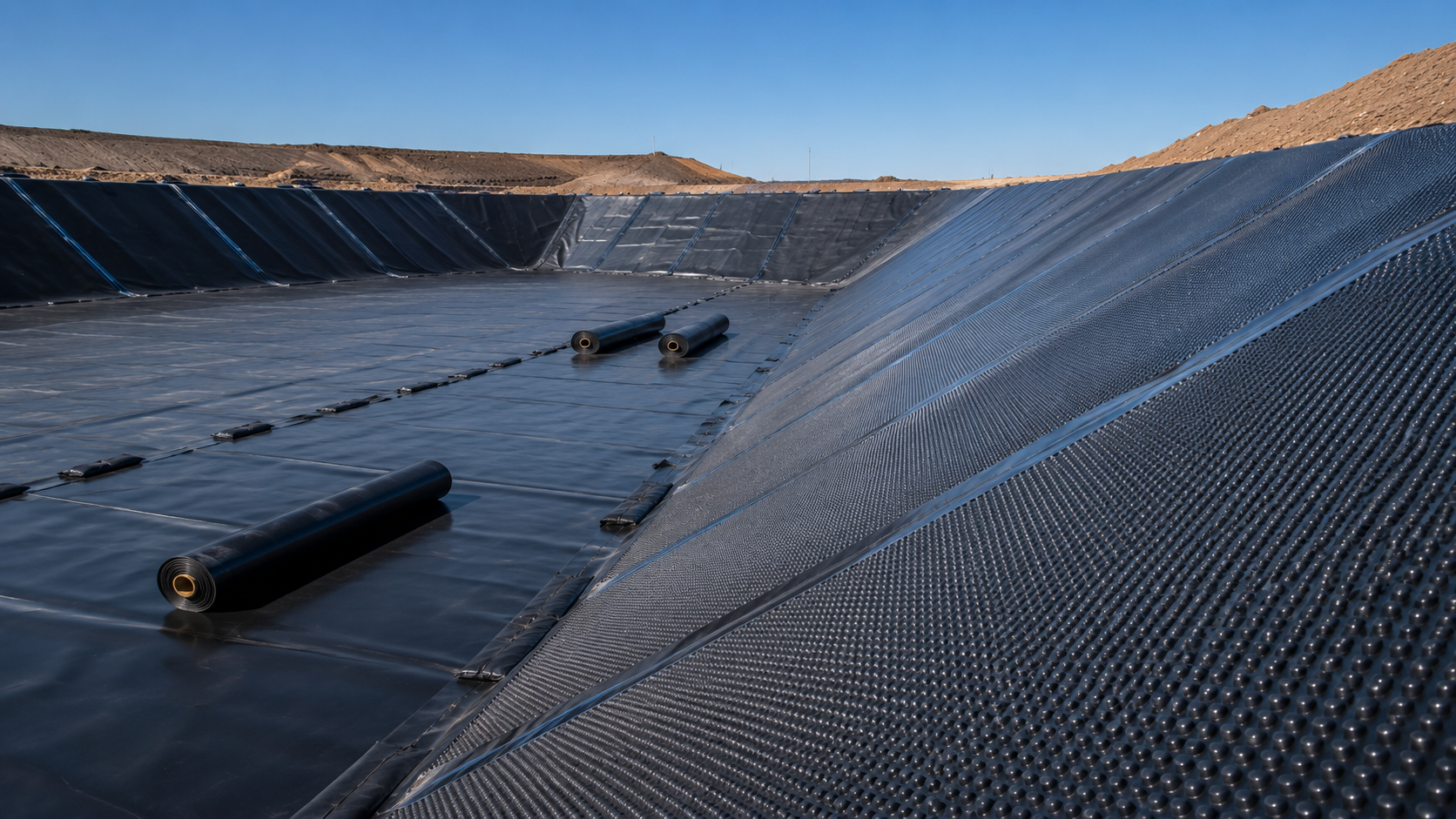
Table of Contents
1. Importance of Anti-Seepage Treatment for Modern Landfills
2. Basic Performance and Advantages of HDPE Geomembrane
3. Structural Differences Between Smooth and Textured Geomembrane
4. Application Scenario Selection for Landfill Anti-Seepage
5. Standard Construction Process of HDPE Anti-Seepage System
6. Engineering Performance Data Comparison
7. Common Construction Problems and Solutions
8. Professional Industry FAQ
1. Importance of Anti-Seepage Treatment for Modern Landfills
Municipal solid waste landfills face severe environmental pollution risks without reliable anti-seepage measures.
Landfill leachate contains a variety of harmful substances. It will penetrate into soil and groundwater and cause long-term pollution.
A complete landfill anti-seepage system is the core barrier for environmental protection and landfill safety.
In current engineering projects, HDPE geomembrane has become the preferred anti-seepage material worldwide.
2. Basic Performance Advantages of HDPE Geomembrane
HDPE material features excellent chemical stability and strong corrosion resistance.
It can resist the erosion of acidic, alkaline and oily leachate in landfills for decades.
The material has low water permeability and high tensile strength. It adapts to foundation settlement and deformation.
These stable physical properties make HDPE geomembrane suitable for long-term underground anti-seepage projects.
3. Structural Differences: Smooth vs Textured Geomembrane
3.1 Smooth Geomembrane Characteristics
Smooth geomembrane has a flat and smooth surface with uniform thickness.
The welding construction is simpler and faster, with fewer defects in the welding seam.
It is widely used in flat foundation and horizontal laying areas of landfills.
3.2 Textured Geomembrane Characteristics
Rough textured geomembrane adopts single-sided or double-sided rough embossing technology.
The surface friction coefficient is greatly improved, which effectively prevents sliding on steep slopes.
It solves the problem of membrane layer slipping on high-slope landfill structures.
4. Type Selection Logic for Landfill Anti-Seepage Projects
Reasonable material selection directly determines the stability of the anti-seepage system construction.
For flat bottom and gentle slope areas of landfills, smooth geomembrane is more cost-effective and efficient.
For side slopes, steep slopes and high-drop structural areas, textured geomembrane must be adopted.
Unreasonable selection will lead to membrane sliding, seam cracking and anti-seepage failure.
5. Standard Construction Process of HDPE Anti-Seepage System
First, clean and level the landfill foundation to remove sharp stones and sundries.
Lay protective geotextile to prevent geomembrane from being punctured by the foundation.
Carry out membrane laying, adjust tension to avoid excessive stretching or folding.
Complete hot-melt welding and extrusion welding, and conduct strict seam inspection.
Backfill and protect the layer after passing the anti-seepage detection.
6. Engineering Performance Data Comparison
The following engineering test data is sourced from IGS (International Geosynthetics Society) official landfill engineering performance database, which is globally recognized and industry-verified.
Performance Index | Smooth HDPE Geomembrane | Textured HDPE Geomembrane |
Surface Friction Coefficient | 0.28 | 0.56 |
Maximum Slope Adaptability | ≤15° | ≤35° |
On-Site Welding Qualified Rate | 98.7% | 95.2% |
Long-Term Anti-Seepage Stability | Excellent on flat ground | Excellent for slopes |
Construction Efficiency | High | Medium |
Data shows that smooth and textured geomembranes have their own advantages. Scientific matching is required according to different landfill zones to ensure overall anti-seepage effect.
7. Common Construction Problems and Solutions
Slope sliding often occurs when using smooth membrane on steep slopes. Replace with textured membrane completely.
Uneven foundation leads to membrane damage. Strict foundation pretreatment is required before laying.
Unqualified welding seams cause leakage. Strengthen secondary detection of all welding positions.
8. Professional Industry FAQ
Q1: What is the core difference between smooth and textured HDPE geomembrane? A1: The biggest difference is surface friction coefficient. Smooth geomembrane is easy for welding and fast in construction. Rough textured geomembrane has strong anti-slip performance, suitable for high-slope landfill structures.
Q2: How to choose geomembrane type for landfill anti-seepage? A2: Flat bottom and gentle slope areas adopt smooth geomembrane. Side slopes and steep slope areas must use textured geomembrane to prevent layer sliding and anti-seepage failure.
Q3: Why HDPE geomembrane is the first choice for landfill projects? A3: HDPE material has ultra-low permeability, strong chemical corrosion resistance and long service life. It can stably isolate landfill leachate and protect soil and groundwater environment.
Q4: What are the key points of anti-seepage system construction? A4: Foundation leveling, anti-puncture protection, standardized welding process and strict leakage detection are the four core key points to ensure the quality of anti-seepage system construction.